


When you notice a loved one struggles with memory, it can be a source of concern and bring up many questions. You might observe small changes at first, like misplaced keys or a forgotten name, leaving you to wonder what these shifts mean. Knowing that communities like ours are designed to support families is a helpful first step on this journey.
Alzheimer’s can affect memory by making it difficult to recall recent events, and it impacts cognition by creating challenges with communication, problem-solving, and completing familiar daily tasks. These shifts can be gradual, but with the right supportive living option, such as memory care, your loved one can continue to lead a fulfilling life.
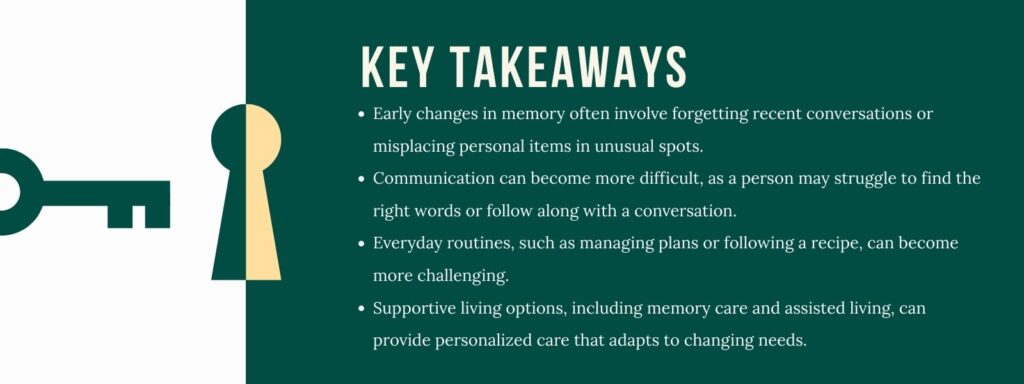
Key Takeaways
- Early changes in memory often involve forgetting recent conversations or misplacing personal items in unusual spots.
- Communication can become more difficult, as a person may struggle to find the right words or follow along with a conversation.
- Everyday routines, such as managing plans or following a recipe, can become more challenging.
- Supportive living options, including memory care and assisted living, can provide personalized care that adapts to changing needs.
A Look at Early Memory Changes
It’s natural to feel worried when you see a loved one struggle with their memory. While everyone forgets things from time to time, some changes are more noticeable than others. Recognizing these early signs can help you find the right path forward together.
Forget Recent Events or Conversations
You may find that your family member asks the same questions repeatedly or forgets discussions you just had. This often relates to challenges with short-term memory, making it hard to retain new information. Your patience and gentle reminders can make a world of difference.
Misplace Items More Often
Have you found the remote control in the refrigerator or glasses in the sugar bowl? Your loved one might put objects in unusual places and be unable to retrace their steps to find them. This is different from occasionally misplacing your keys.
Struggle with Familiar Names
Recalling the names of family members or close friends can become a challenge. This can be a difficult experience for everyone involved. Offering quiet support and learning how to communicate effectively can help your loved one feel more comfortable.
How Communication and Language Can Shift
Cognitive changes can also influence how a person communicates their thoughts and feelings. These shifts can be frustrating, but the right approach can help you and your loved one stay connected in meaningful ways.
Difficulty to Find the Right Words
Your loved one may pause frequently during conversations or use other words for ones they cannot recall. For example, they might describe a watch as “the thing on your arm that tells time.” Their intent is to communicate, even when the words don’t come easily.
Follow Conversations or Storylines
It can become harder to keep up with group discussions or the plot of a favorite television show. A calm and supportive environment, free from too many distractions, can make conversations more enjoyable and less overwhelming.
The Impact on Daily Tasks and Routines
Cognitive changes can make everyday activities more complicated than they used to be. This is where different levels of support, including memory care, can help a person preserve their lifestyle and sense of self.
Challenges with Plans and Decisions
You may notice a loved one struggle with multi-step tasks that were once simple. Following a recipe, managing a budget, or making simple plans for the day can become confusing and require more concentration.
Confusion with Time or Place
Losing track of dates, seasons, or even their current location can happen. This disorientation is a common part of the journey for many families and is a sign that more structure and support could be helpful.
Support Can Help Navigate These Changes
There are many ways to support a loved one and help them live a full and engaging life. A dedicated senior living community offers options designed to adapt as your loved one’s needs evolve, always with a focus on dignity and respect.
Personalized Approaches to Care
Specialized memory care programs provide a structured and calming environment. These programs use activities that help residents feel secure and successful in their daily lives, which can improve their overall well-being.
Flexible Support Options
Sometimes, family caregivers need a break, or a person needs short-term support after a hospital stay. Respite care is a great option that offers a temporary, safe, and nurturing environment for your loved one while also helping you avoid caregiver stress.
Find a Path Forward with Compassionate Care
Navigating the changes that come with Alzheimer’s can feel overwhelming, but you’re not alone. With the right support system, your loved one can continue to experience joy, connection, and comfort in a community that cares.
You can explore lifestyle choices that honor independence and dignity, connect with a community built on compassion and respect, and learn more about how a supportive environment can improve your loved one’s quality of life.
At Bentley Assisted Living at Paragon Village, our team is driven to provide comfort and compassionate care for every resident. If you’re searching for the right fit for your loved one, we can help you see how a supportive community could be the perfect option.
Reach out to schedule a tour and learn more about our lifestyle choices.