
Key Takeaways
- Art therapy uses creative activities within structured sessions led by a trained art therapist.
- Older adults don’t need previous artistic experience or skill to participate.
- Art therapy supports emotional expression and provides a structured outlet for difficult feelings.
- Creative decisions engage attention, planning, problem-solving, memory, and other cognitive skills.
- Easy-to-grip tools, stable workspaces, larger materials, and other adaptations make art more accessible.
Why Creative Expression Matters Later in Life
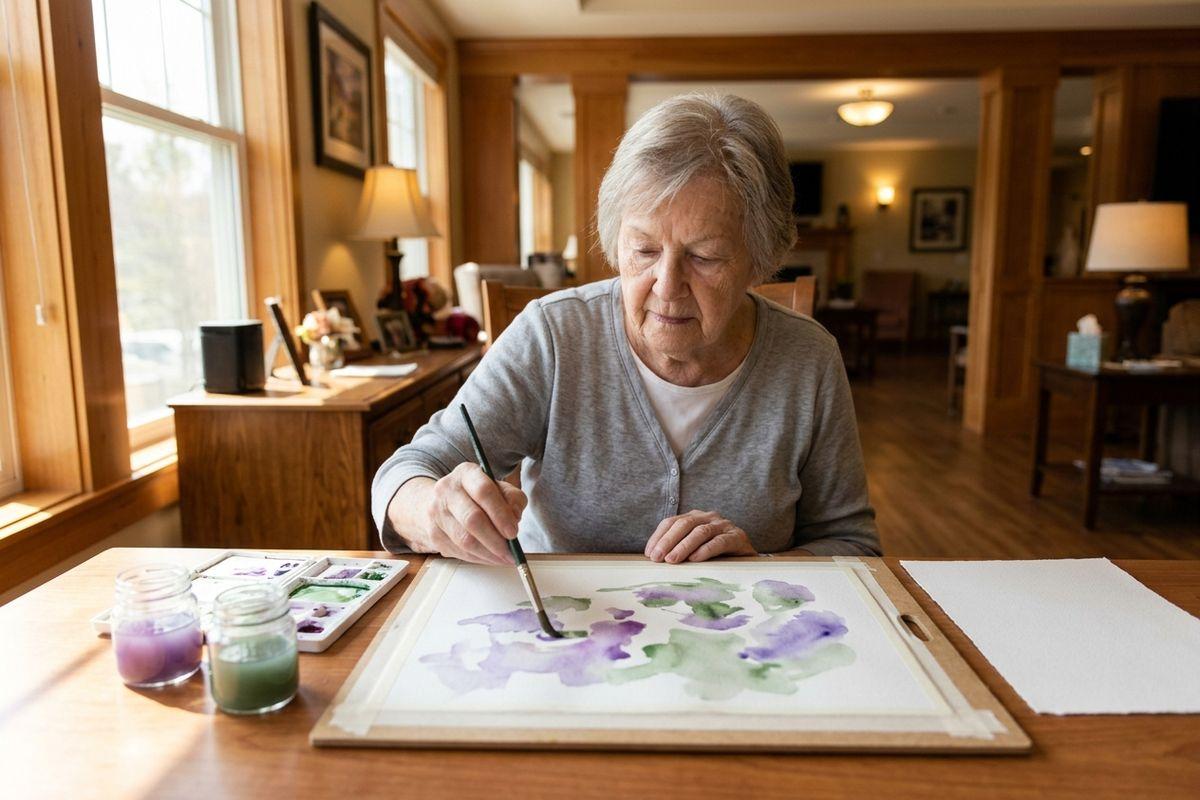
Creative expression doesn’t disappear with age. Painting, drawing, sculpting, and other forms of art give older adults a place to communicate feelings, focus their attention, work with their hands, and connect with others. These activities also leave plenty of room for personality and personal choice.
Art therapy builds on the creative process through sessions led by a trained art therapist and shaped around therapeutic goals. That’s why it’s such an important part of daily life in senior living. Art therapy helps with emotional expression, cognitive engagement, social interaction, and fine motor activity. Artistic talent isn’t a requirement, either. Participation is the point.
What Is Art Therapy for Older Adults?
Art therapy uses creative activities within a structured therapeutic setting. A trained art therapist guides each session based on the participant’s needs and goals. Painting, drawing, collage, sculpture, and other visual arts can all be part of the process.
Older adults don’t need to know how to paint or draw before they begin. The finished piece isn’t being judged on technique. Instead, the creative process gives participants another way to communicate, make choices, focus their attention, and work through emotions.
The Benefits of Art Therapy
Art therapy combines creative choices, focused attention, movement, and personal expression in a single activity. Depending on the goals of the session, an art therapist can emphasize different areas of well-being.
Emotional Expression and Stress Relief
Feelings surrounding grief, changing health, or major life transitions aren’t always easy to put into words. Art provides another language through color, shape, texture, and imagery. Concentrating on the creative process also directs attention toward the activity at hand, providing a structured outlet for difficult emotions.
Cognitive Engagement
Even a simple art project involves decisions. Older adults choose materials, plan what they want to create, respond to changes as the piece develops, and solve small problems along the way. Familiar subjects and images can also bring personal experiences and memories into the creative process.
Social Connection
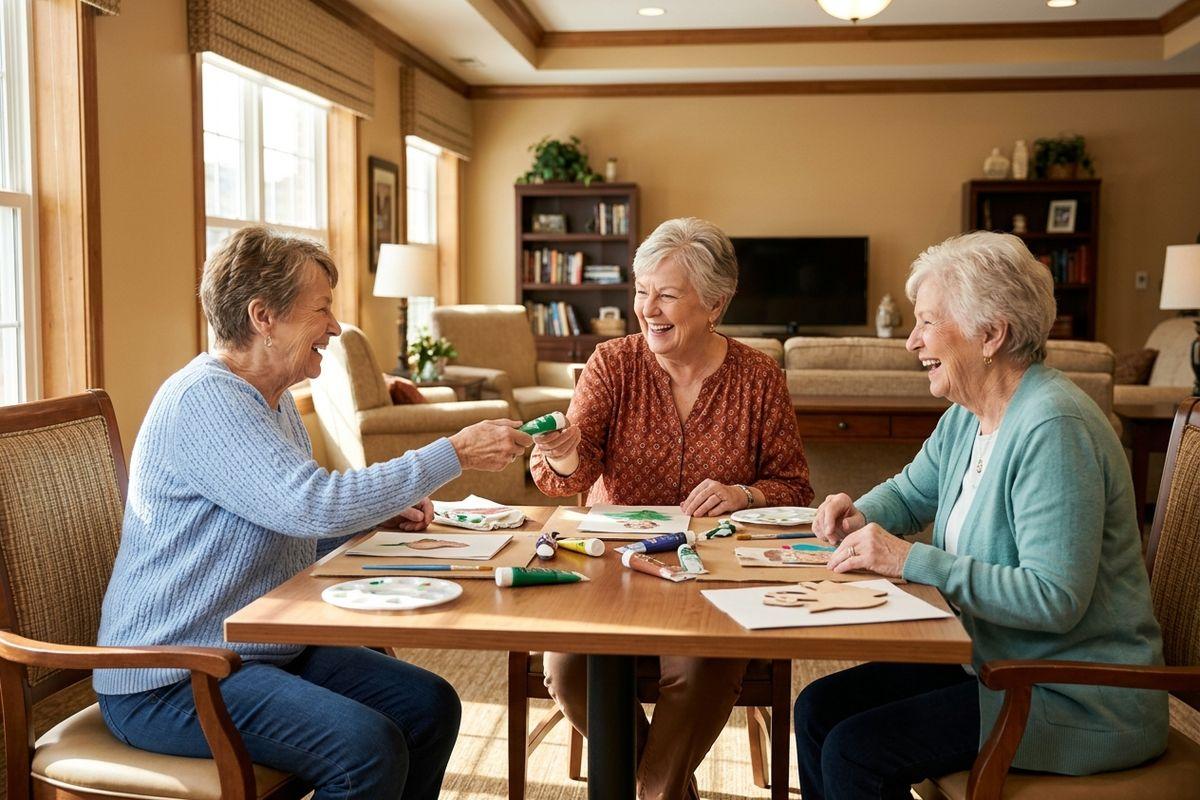
Group art therapy puts people together around a shared interest, so conversation has a natural starting point. Participants can compare ideas, talk about their work, or simply create alongside one another. And for someone who prefers less conversation, working quietly still keeps them involved in the group.
Boosted Fine Motor Skills and Coordination
Holding a brush, guiding a pencil, cutting paper, and shaping clay all require controlled hand and finger movements. These activities also engage hand-eye coordination as older adults work with different tools and materials. An art therapist can adjust the materials or activity to match the participant’s abilities.
Art Therapy vs. Creative Activities in Senior Living
Art therapy and recreational art programs serve different purposes. Art therapy connects creative work to defined therapeutic goals under the guidance of a trained art therapist. On the other hand, recreational programs focus more on creating, learning, socializing, and spending time on activities that residents find interesting.
Both bring creativity into senior living. Residents can paint, draw, make seasonal crafts, work with different materials, or join neighbors for a group project without the activity needing to be therapeutic. An art class doesn’t become art therapy simply because it involves creative expression, and recreational art doesn’t need that label to be worthwhile. Each offers its own kind of experience.
How to Make Art More Accessible to Seniors
Art is an excellent hobby that can be extremely rewarding to seniors. However, changes in vision, mobility, grip strength, or dexterity can change how an older adult approaches art. A few practical adjustments keep materials easier to handle and the workspace more comfortable.
It helps to:
- Choose brushes, pencils, and other tools with comfortable, easy-to-grip handles.
- Provide a stable work surface and supportive seating.
- Use larger paper, canvases, or materials when more working space is needed.
- Keep frequently used supplies organized and within reach.
- Offer several types of art so older adults can follow their interests.
- Adjust materials and project steps for changes in vision, mobility, or dexterity.
- Keep the focus on expression and participation instead of producing a polished result.
Accessibility isn’t about stripping the challenge or personality out of an art project. It’s about removing practical obstacles so older adults can take part, make their own choices, and create on their terms.
Creativity and Life at Bentley Assisted Living
Art therapy supports older adults through emotional expression, cognitive engagement, social connection, and hands-on activity. Recreational art has a different purpose, but creativity doesn’t need a therapeutic goal to be meaningful. A brush, pencil, piece of clay, or blank page can still become a place for personal interests and self-expression.
At Bentley Assisted Living at Paragon Village, we value days filled with meaningful activities, personal interests, and time spent with others. Our approach to assisted living in Hackettstown gives residents opportunities to stay involved in the community and pursue the activities they care about. Schedule a tour of Bentley Commons at Paragon Village today to learn more about life in our community.